Denice D. Lewis
International Fashion Model · Actress · Artist · Photographer · Creative Entrepreneur
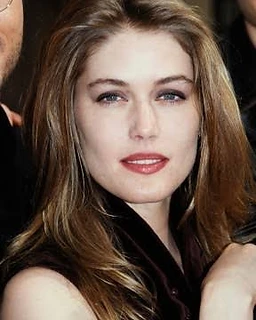
Before the next generations of the family entered business, design, entertainment, philanthropy and public life, Denice D. Lewis had already built a life that crossed continents and creative disciplines.
Born in Lynchburg, Virginia, Denice emerged into the international fashion world during an era defined by extraordinary personalities, editorial fashion, European glamour and the increasing cultural power of the model.
Her career eventually carried her far beyond Virginia and into the fashion centers of London, New York and Los Angeles. Denice was represented during her modeling career by internationally recognized agencies including Models 1 in London, Ford Models, Elite and Wilhelmina in New York.
London became a particularly important chapter of her life. She spent approximately nine years living there while developing an international modeling career that placed her within the city's fashion and social culture. Her image appeared in editorial and fashion media, including a documented July/August 1988 cover of British Tatler—placing her among the recognizable faces of one of Britain's most established society and fashion publications.
Her career unfolded during a remarkable period in fashion history, when models were increasingly becoming cultural personalities in their own right and the worlds of fashion, music, film, art and society frequently intersected. Denice belonged to that world.
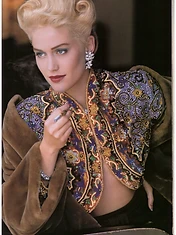
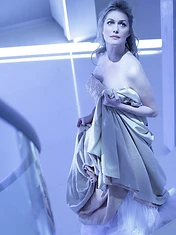
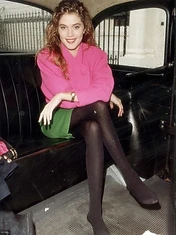
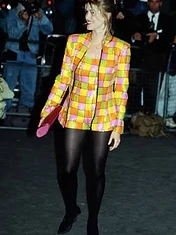
Her presence extended beyond traditional fashion photography and the runway. Denice appeared in music videos connected with some of the most recognizable names and recordings of the era.
Her credits include appearances associated with Bryan Ferry's “Kiss and Tell,” Right Said Fred's “I'm Too Sexy,” Zucchero and Paul Young's “Senza una donna (Without a Woman),” and other music projects.
These appearances placed her at the intersection of two worlds that were becoming increasingly inseparable: fashion and popular culture.
She wasn't simply photographed wearing fashion. She became part of the imagery through which an era expressed itself.
Denice subsequently expanded her career into acting. Her television credits include appearances in productions such as Red Shoe Diaries, Burke's Law, Silk Stalkings and Renegade.
Her film work included Necronomicon: Book of the Dead, I Woke Up Early the Day I Died, Diamondbacks, and the 1999 supernatural action film End of Days, starring Arnold Schwarzenegger.
Her transition from modeling to acting reflected something that would continue throughout her life: Denice refused to define herself through a single creative identity.
Model became actress. Actress became artist. Artist became photographer. And creativity continued evolving.
Denice's life also intersected with some of the prominent social and cultural circles of her generation. Her long relationship with Dodi Al-Fayed has been discussed publicly in subsequent reporting and documentary work. Years later, Denice participated as herself in documentary projects examining Dodi's life.
But the significance of Denice's story does not rest upon the famous people around her. She had an identity of her own.
She was traveling internationally, modeling professionally, appearing before cameras and developing a creative life during a period when relatively few women could turn an international modeling career into a multidimensional life spanning fashion, entertainment and the arts.
Eventually, Denice stepped away from the intensity of public fashion life and returned more deeply to visual art. Her creative interests expanded into photography, painting, filmmaking and abstract art.
She became particularly associated with abstract and memorial artwork, developing another visual language through which she could explore memory, emotion, spirituality and human experience.
Photography also became part of her professional identity, allowing the woman who had spent years in front of the lens to develop her own perspective from behind it.
For years, photographers interpreted Denice. Eventually, Denice became the interpreter.
The photographs document the model. The credits document the actress. The artwork documents the creator. But none of those things alone explain Denice D. Lewis.
Her life has crossed fashion, entertainment, visual art, photography, entrepreneurship, travel and philanthropy. Her professional profile also reflects decades of charitable and community involvement, alongside memberships and affiliations connected with the arts and entertainment community.
Her story represents the kind of heritage Valen Prit Bohdan exists to preserve: not simply wealth or titles, but experience, creation, resilience, cultural memory and the knowledge passed from one generation into another.
Within the history of Valen Prit Bohdan, Denice D. Lewis represents an earlier creative generation whose influence reaches beyond a modeling portfolio.
As the adoptive mother of Ajahanna V. De Vargas, her place within the family's history connects one generation of fashion, entertainment and artistic expression with another generation now moving through entrepreneurship, design, law, philanthropy and entertainment.
Ajahanna grew up with a mother who understood what it meant to enter a room, stand before a camera, work within image-driven industries and survive environments in which presentation could become both profession and power. That exposure became part of the family's cultural inheritance.
Today, as Ajahanna enters another public chapter of her own life, the connection becomes especially poignant. The daughter is not attempting to recreate the mother's career. She is carrying forward something deeper: the permission to become many things in one lifetime.
Denice was never only a model. Ajahanna is not only an actress. And the generations following them are not required to fit into a single definition either. That may ultimately be one of Denice D. Lewis's most enduring contributions to the heritage of the family.
Fashion gave her a stage.
Film gave her another character.
Photography gave her another perspective.
Art gave her another language.
Family gave the story somewhere to continue.
The career of Denice D. Lewis belongs to another era of international fashion. Her influence belongs to the generations that followed.
The next generation is not expected merely to inherit. They are expected to build.
Founded by Ajahanna Valentine De Vargas, Valen Prit Bohdan Holdings represents decades of vision brought into structure — a name that will one day carry the weight of every company, every foundation, and every act of service built beneath it. Every daughter of this House is encouraged to become a founder — to create, to lead, to innovate, to steward, to serve.
Legacy is not measured by what one generation accumulates. Legacy is measured by what every generation adds.
The foundations of this family were laid long before the creation of our companies.
The House of Valen Prit Bohdan carries forward a bloodline of craft and creativity: an engineer grandfather who built with precision, seamstress grandmothers who built with patience and detail, and an opera-singing great-grandmother whose voice carried generations of artistry. These threads — precision, care, and artistry — remain woven into every company under the Valen Prit Bohdan name.
Valen Prit Bohdan exists to ensure their stories continue forward while inspiring those who come after us.